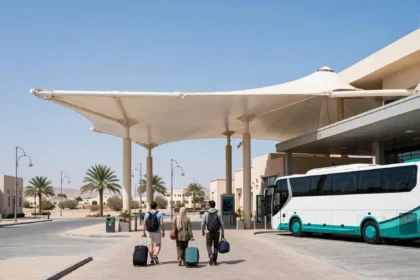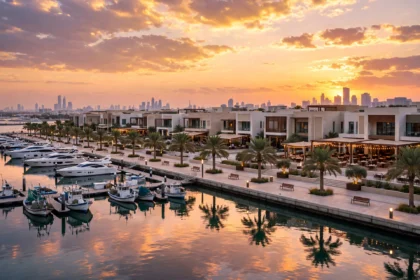

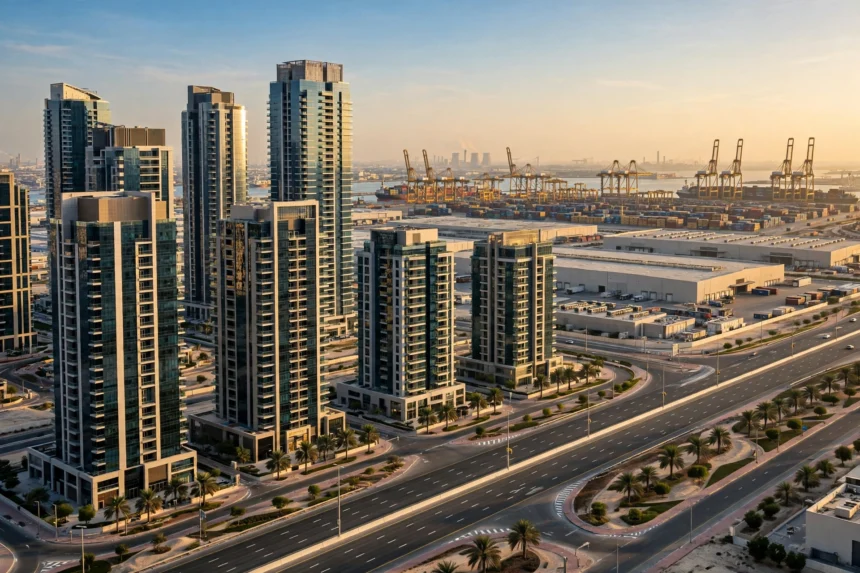
A Jebel Ali building is not one kind of property. The name covers new apartment towers on Sheikh Zayed Road, warehouses in the industrial areas, offices in the free zone, and staff housing near the port.
- Jebel Ali Building at a Glance
- Where Jebel Ali Sits and Why Its Buildings Look Different
- The Three Kinds of Jebel Ali Building
- What a Jebel Ali Building Costs
- Industrial Areas 1, 2 and 3 Compared
- A Jebel Ali Building Is Not Always in JAFZA
- Getting to Jebel Ali
- Checks Before You Rent or Buy a Jebel Ali Building
- For warehouses and industrial units
- For apartments and off-plan towers
- Checks that apply to any building here
- Living Near Jebel Ali
- How Jebel Ali Compares With Other Industrial Districts
- Who This District Suits Best
- Frequently Asked Questions
That mix is what confuses most searches. A person looking for a home sees warehouse listings. A business looking for storage sees apartment launches.
This article separates the three kinds of Jebel Ali building, with prices, areas, transport, and the checks to run before you sign anything.
Jebel Ali Building at a Glance
| Detail | What to know |
|---|---|
| Location | About 35 km southwest of central Dubai, on the coast |
| Main parts | Jebel Ali Port, JAFZA free zone, Industrial Areas 1, 2 and 3, Jebel Ali Village, Downtown Jebel Ali |
| Building types | Apartment towers, warehouses, factories, offices, staff housing, villas in the village |
| Main roads | E11 Sheikh Zayed Road, E311 Sheikh Mohammed Bin Zayed Road, D57 Jebel Ali-Al Hibab Road |
| Metro | Red Line stations at Jebel Ali, Danube, Energy and Life Pharmacy |
| Nearest airport | Al Maktoum International (DWC), about 12 km from Downtown Jebel Ali |
| Who it suits | Port and free zone workers, logistics firms, investors, buyers seeking lower prices |
Where Jebel Ali Sits and Why Its Buildings Look Different
Jebel Ali grew around trade, not tourism. The port opened in 1979, and the free zone followed in 1985. Today the port is the largest man-made harbour in the world, and the busiest container port in the Middle East.
That history shapes every building here. Warehouses sit beside the port for a reason. Offices cluster inside the free zone for tax and customs reasons.
Homes came later, and mostly for the people who work in the area.
The district covers about 134 sq km around the port. It also holds Expo City Dubai, Dubai Investments Park, and the Jebel Ali Power and Desalination Complex. Palm Jebel Ali sits just offshore.
The name itself is simple. Jebel Ali is often translated as Ali’s hill. The area was a quiet stretch of coast before Sheikh Rashid chose it for a deep-water port in the 1970s.
The Three Kinds of Jebel Ali Building
Most searches for a Jebel Ali building fall into three groups. Each group has different prices, rules, and risks.
Apartment Towers in Downtown Jebel Ali
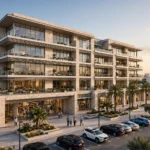
The newest homes sit along Sheikh Zayed Road in Downtown Jebel Ali and the Freezone Extension. These are off-plan towers, sold before completion, with payment plans spread over construction.
Jebel Ali Downtown 01 by Tarrad Development is one example. It offers studios to two-bedroom apartments, with prices from AED 570,000. The payment plan asks 20 percent on booking, 30 percent during construction, and 50 percent on handover.
Empire Jebel Ali Residences is an 18-storey tower with 116 homes. It offers studios to three-bedroom apartments from AED 750,000, with handover planned for September 2029. Azizi Gabriel is a 16-floor tower with 234 homes, and handover is planned for the last quarter of 2028.
These towers suit buyers who work in the south of Dubai or near the port. Prices sit below Dubai Marina and central Dubai. The trade-off is distance, and the fact that the neighbourhood is still filling in.
Warehouses and Industrial Units
Warehouses are the oldest and most common Jebel Ali building type. They range from small storage units to large high-bay blocks built for racking systems. Some add cold storage, workshops, or office space on the same plot.
Industrial Area 1 has the widest choice. It holds warehouses, factories, offices, shops, and staff housing in one grid of roads. Areas 2 and 3 are more industrial, with larger plots and heavier storage yards.
The JAFZA Logistics Park shows the scale of demand here. Its first phase covers 562,507 sq ft of Grade A storage, temperature-controlled warehouses, and offices.
It was fully leased before completion. A second phase was planned to add 250,000 sq ft.
A warehouse is not just floor space. Power load, ceiling height, loading bays, and the approved business activity decide whether a unit works for you. A storage unit may not allow manufacturing or food handling.
Offices and Staff Housing
Offices in Jebel Ali serve the port, the free zone, and the logistics firms around them. Some sit inside warehouses. Others sit in small office blocks near the main roads.
Staff housing is a large part of the district. Labour camps and company accommodation blocks sit close to warehouses, so shift workers live near their jobs. Some blocks add dining halls, laundry rooms, and simple recreation areas.
Jebel Ali Village is the exception. It is a gated villa community with tree-lined streets, parks, and a school inside it. Nakheel rebuilt the village in recent years on the old plan.
It is the residential heart of the district, and the only part that feels like a suburb.
What a Jebel Ali Building Costs
Prices vary widely because the building types vary widely. The figures below come from registered sales and portal listings, and they change often.
Treat them as a snapshot, not a quote. Asking prices are not transaction prices.
| Building type | Price signal |
|---|---|
| Off-plan apartment, Downtown Jebel Ali | From AED 570,000 (studio) |
| Off-plan apartment, 18-storey tower | From AED 750,000 |
| Median resale, Jebel Ali | AED 1.01 million |
| Median resale per sq ft | AED 1,098 |
| Equiti Gates apartments, Industrial Area 2 | Median AED 1,486 per sq ft |
| Warehouse asking price (Bayut, July 2026) | AED 3.5 million to AED 14 million |
| Labour camp asking price (Bayut, July 2026) | AED 17.7 million to AED 72 million |
| Commercial plot asking price (Bayut, July 2026) | AED 5.6 million to AED 35 million |
Registered sales tell a steadier story than listings. Jebel Ali has 20 buildings with a recorded sale history, and 6,769 sales registered since 2009. One tower was handed over in 2026, and 13 projects were still off-plan.
The cheapest resales sit well below central Dubai. Suburbia A, for example, resells at a median of AED 580,000. That is why first-time buyers and investors watch this district.
Rents follow the same pattern. Studios and one-bedroom apartments dominate the small residential stock in Industrial Area 2. The typical home there is about 437 sq ft, far smaller than the Dubai median of about 826 sq ft.
Industrial Areas 1, 2 and 3 Compared
Dubai Municipality lists three official industrial communities in Jebel Ali. The number matters, because roads, transport, and property types change across them.
| Area | Community code | Character |
|---|---|---|
| Jebel Ali Industrial Area 1 | 599 | Mixed: warehouses, factories, offices, shops, apartments, staff housing |
| Jebel Ali Industrial Area 2 | 518 | Heavier industry, larger plots, limited housing |
| Jebel Ali Industrial Area 3 | 516 | Industrial plots, limited public detail |
Area 1 is the best documented. It has the most shops, services, and housing. Areas 2 and 3 have less public information, so direct checks matter more there.
In Industrial Area 2, only one residential building is complete. Equiti Gates, built by BNH Real Estate Development, holds 249 apartments across 14 floors. It accounts for every recent apartment sale in that community.
Before you visit any unit, confirm the community code, the plot and building number, and the exact map pin. Two warehouses on the same road can sit in different areas, with different rules.
A Jebel Ali Building Is Not Always in JAFZA
This is the most common confusion in the district. Jebel Ali Industrial Area and the Jebel Ali Free Zone are neighbours, not the same place.
JAFZA was created in 1985 around the port. Companies inside it get free zone benefits, including tax and customs treatment. It started with 19 companies.
Today it hosts more than 8,700 companies from over 100 countries, and it contributes about 23 percent of Dubai’s GDP.
The industrial areas sit on the mainland side, under normal Dubai jurisdiction. A warehouse there follows mainland rules. A warehouse inside JAFZA follows free zone rules.
The rent, the licence, and the paperwork differ.
Ask which side of the line a building sits on before you agree to anything. The answer changes the licence you need, the visa rules for staff, and the cost of moving goods in and out.
Getting to Jebel Ali
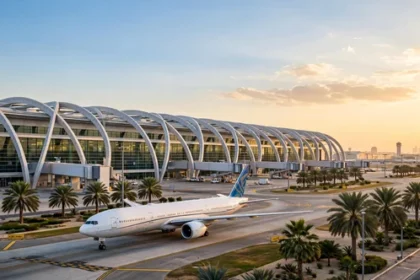
The Red Line serves the district, but the last part of the trip needs planning. Jebel Ali, Danube, Energy, and Life Pharmacy stations sit along Sheikh Zayed Road. From there, many workplaces still need a bus, a company shuttle, a taxi, or a long walk.
The walk can be long. The nearest station to parts of Industrial Area 2 is almost 3 km away. In summer heat, that distance matters.
Check the real route, not just the nearest station on a map.
Road access is strong. Sheikh Zayed Road (E11) runs along the district, with Sheikh Mohammed Bin Zayed Road (E311) and Jebel Ali-Al Hibab Road (D57) linking the industrial lanes. Trucks use these roads daily, so expect heavy vehicles on the inner roads.
For a wider sense of how Dubai’s metro stations connect, see the Dubai Airport Free Zone Metro Station article. It shows how a Red Line station works in practice. The Union Metro Station Garden article covers the main interchange at the other end of the line.
Parking is usually open-air and plentiful near warehouses. Apartment towers provide basement or podium parking. Always confirm the number of bays in writing, since visitor parking can be tight.
Checks Before You Rent or Buy a Jebel Ali Building
A building can look right and still fail on paper. Run these checks before you pay anything.
For warehouses and industrial units
- Confirm the approved business activity matches your trade licence.
- Ask for the electrical load in writing, and check for three-phase power.
- Measure ceiling height, floor load capacity, and loading bay access.
- Check truck turning space and yard access for your largest vehicle.
- Confirm fire alarms, sprinklers, ventilation, and drainage.
- Ask who pays for maintenance, fit-out, and service charges.
- Check the condition report, and photograph the unit before handover.
For apartments and off-plan towers
- Check the developer’s registration with the Dubai Land Department.
- Confirm the escrow account for off-plan payments.
- Read the payment plan, including the 4 percent DLD fee, which is paid separately.
- Ask about the service charge per sq ft, and what it covers.
- Visit the site. A tower on a map can sit beside a warehouse or a busy road.
- Check the handover date, and what happens if it slips.
Checks that apply to any building here
- Confirm the Makani number and the exact map pin.
- Check whether the building is inside JAFZA or on the mainland.
- Confirm the entrance. The office door and the loading entrance are not always the same gate.
- Ask about the deposit, the agency fee, and the utility deposit, since the advertised rent is rarely the full cost.
Living Near Jebel Ali
Daily life here is practical, not polished. Small shops, groceries, and cafeterias serve the industrial lanes. Larger shopping sits a short drive away in the Marina, Al Furjan, or Ibn Battuta Mall.
Healthcare is available in the district, with clinics near the industrial areas and hospitals a drive away in central Dubai. Mosques serve the area, and other places of worship sit in nearby districts.
Leisure is limited inside the industrial lanes. The coastline near the port is working coast, not a beach strip. Residents drive to public beaches elsewhere, including La Mer Beach, one of Dubai’s best-known public beaches.
The trade-off is clear. You get space, lower prices, and a short commute to port and free zone jobs. You give up walkable streets, cafes on every corner, and quick access to central Dubai.
Families usually choose Jebel Ali Village or nearby communities like Al Furjan and Discovery Gardens. Workers often choose staff housing or a small apartment near their job. Investors look at the off-plan towers, where entry prices are low and the metro is close.
How Jebel Ali Compares With Other Industrial Districts
Jebel Ali is not Dubai’s only industrial district. Al Quoz, Ras Al Khor, and Dubai Investments Park all serve similar firms. Jebel Ali stands out for its port link and its free zone.
Al Quoz sits closer to central Dubai, with higher rents and more mixed use. Ras Al Khor serves the Creek side. Dubai Investments Park sits next door to Jebel Ali, and many firms treat the two as one work area.
For a comparison with another industrial district, read the Al Sajaa Industrial Area article. It shows how a Sharjah-side industrial area differs in prices, transport, and daily life.
The right choice depends on where your goods move. If your cargo comes through the port, Jebel Ali saves time every day. If your clients sit in central Dubai, a closer district may serve you better.
Who This District Suits Best
Some buyers and tenants fit this district better than others. The table below gives a quick read.
| You are | It suits you if | Think twice if |
|---|---|---|
| Logistics or trading firm | Your goods move through the port or JAFZA | Your clients need a central Dubai address |
| Warehouse tenant | You need large space, power, and truck access | You need foot traffic or walk-in customers |
| Port or free zone worker | You want a short commute and lower rent | You want nightlife and cafes nearby |
| First-time buyer | You want a low entry price near the metro | You need a finished community today |
| Investor | You buy off-plan early at a low price | You need quick resale or high rental yield now |
Frequently Asked Questions
Is every building here inside the free zone?
No. JAFZA is a free zone beside the port, created in 1985. The industrial areas, the village, and the new towers sit outside it, under mainland Dubai rules.
Always ask which side a building sits on.
Which metro station serves Jebel Ali?
The Red Line serves the district through Jebel Ali, Danube, Energy, and Life Pharmacy stations. Check the walking distance from the station to your building, since some workplaces are kilometres from the platform.
Are there apartments in Jebel Ali?
Yes, but the stock is small. New off-plan towers are rising in Downtown Jebel Ali, and Jebel Ali Village holds villas. Industrial Area 2 has a single completed residential building, Equiti Gates, with 249 apartments.
Is Jebel Ali good for families?
Jebel Ali Village works for families, with villas, parks, and a school. The industrial lanes do not. Most families in the area choose the village or a nearby community like Al Furjan.
How far is Jebel Ali from central Dubai?
Jebel Ali sits about 35 km southwest of central Dubai. Dubai Marina is the nearest major district, a short drive up Sheikh Zayed Road. Downtown Dubai sits about 35 km up the same road.
What is the largest man-made harbour in the world?
Jebel Ali Port holds that title. It opened in 1979, covers about 134 sq km, and handles millions of containers each year. DP World operates it.